
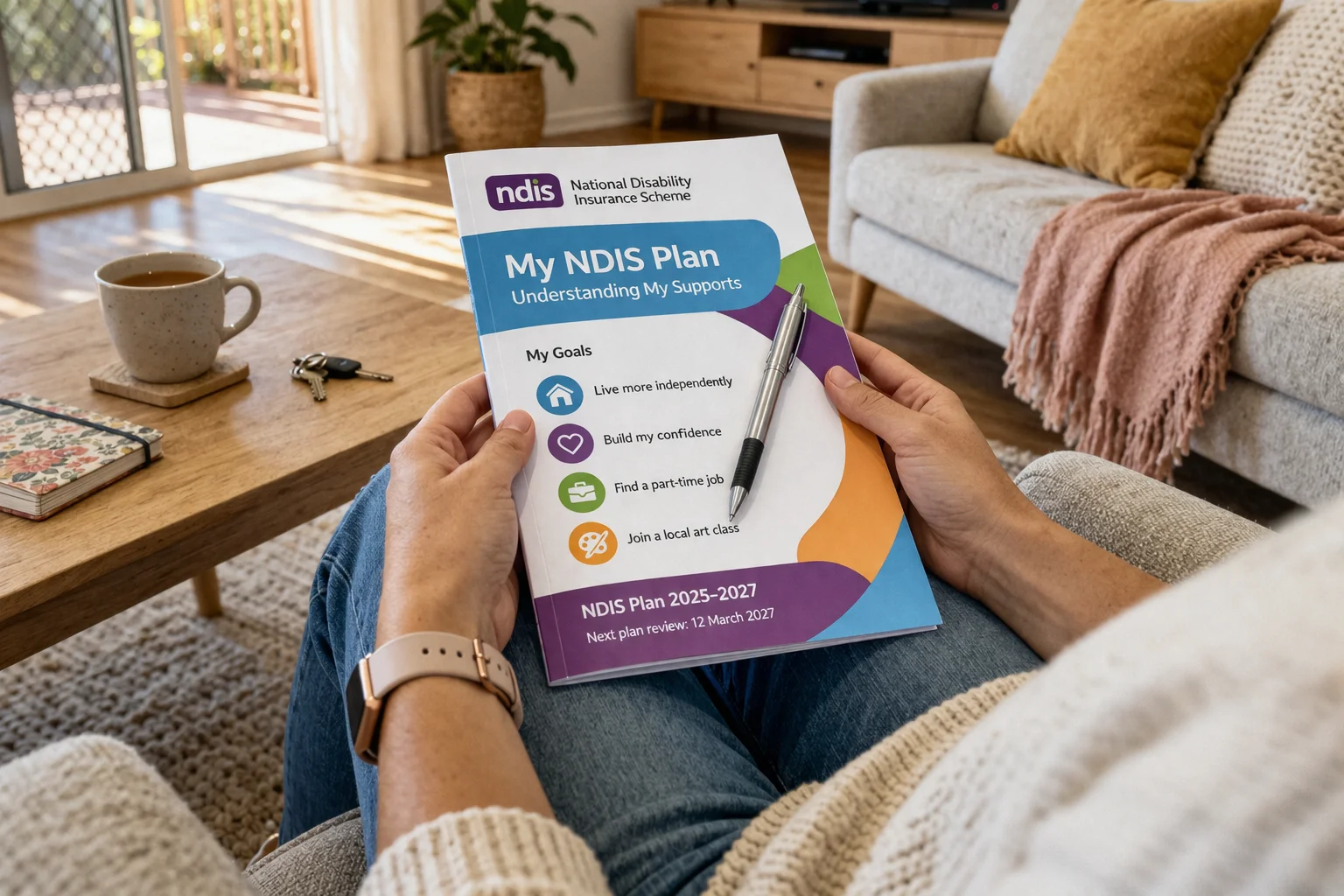
You are probably feeling a mix of emotions right now, like hope, confusion, and maybe even a little bit of being overwhelmed. You might be a parent who just found out that your child needs help, or you might be an adult with a disability who is trying to figure out how to pay for the care you need to live on your own.
You have heard the term “NDIS” thrown around, but every time you try to understand it, the language feels too complex. You might be wondering, “Am I eligible?” or “How do I even start?“
Take a deep breath. You are in the right place.
We think that figuring out the National Disability Insurance Scheme (NDIS) shouldn’t be like putting together a puzzle without the picture on the box. This guide will explain the NDIS registration process in the easiest way possible.
We will walk you through what the NDIS actually is, who it is for, how to check if you qualify, and—most importantly—how to start accessing the support you need. By the end of this article, you will have a clear roadmap to follow.
Contents
- 1 What is the NDIS? (The Simple Explanation)
- 2 Who is the NDIS For? (Eligibility Basics)
- 3 Understanding the “NDIS Registration Process”
- 4 What Happens After You Register? (Your First Plan)
- 5 How to Use Your NDIS Funding
- 6 Finding Support Workers and Services
- 7 A Real-Life Example: Meet Sarah
- 8 Common Beginner Questions (Answered)
- 9 Mistakes to Avoid as a Beginner
- 10 Conclusion: Your Next Steps
What is the NDIS? (The Simple Explanation)
Before we dive into the “how,” we need to cover the “what.” The National Disability Insurance Scheme (NDIS) is a government-funded program in Australia. Think of it as a safety net designed specifically for people with permanent and significant disabilities.
But it is more than just funding. The NDIS is about choice and control.
In the past, families often had to take whatever services the government offered. Now, the NDIS gives you the power to decide:
- Who supports you.
- What goals you want to achieve (like getting a job, learning to cook, or moving out of home).
- How your funding is spent.
Is the NDIS Welfare?
No. This is a common misconception. The NDIS is insurance. The Australian Government invests in support for people with disabilities now, so that you have the tools to build a better, more independent life for the long term.
Who is the NDIS For? (Eligibility Basics)
This is usually the first question people ask: “Does my condition qualify?”
To access the NDIS, you must meet a few key criteria. Let’s break them down like a checklist.

1. Age Requirement
You must be under 65 years of age when you first apply. If you are over 65, you would typically look to My Aged Care instead, though there are some transitional arrangements.
2. Residency Status
You must live in Australia and be an Australian citizen, a permanent resident, or a Protected Special Category Visa holder.
3. Disability Requirements
This is the part that feels the most technical, but we’ll keep it simple. You will likely qualify if you have a permanent disability that significantly affects your ability to:
- Communicate.
- Move around or travel.
- Learn or socialise.
- Look after yourself (e.g., dressing, eating, showering).
It doesn’t have to be a physical disability. The NDIS supports people with intellectual disabilities, psychosocial disabilities (mental health), autism, cerebral palsy, and many other conditions.
Understanding the “NDIS Registration Process”
Now we get to the heart of the article. When we talk about the NDIS registration process, we are actually talking about two different things depending on who you are:
- For Participants: This is the process of applying to become an NDIS participant (getting funding).
- For Providers: This is the process of registering a business to provide services.
Since you are a beginner looking for support, we will focus on how you register to become a participant.
Step 1: Check Your Eligibility (The First Step)
Before you fill out any long forms, the easiest step is to check if you are eligible. You can do this by using the NDIS Access Checklist on the official NDIS website.
However, a simpler way to start is to call the NDIS on 1800 800 110 and ask them to walk you through it. They are usually very helpful for beginners.
Step 2: Gather Your Evidence
To prove that you meet the disability requirements, you will need evidence. This is usually a document from a health professional.
- For adults: A report from your GP (General Practitioner), specialist, or occupational therapist.
- For children: Reports from a paediatrician, speech pathologist, or early childhood educator.
Pro Tip: When asking your doctor for a report, ask them to specifically outline how your condition impacts your daily life. For example, instead of just saying “autism,” they should note “requires support to engage in community activities and struggles with verbal communication.”
Step 3: Make an Access Request
This is the formal “registration” step. You can make an Access Request by:
- Phone: Calling the NDIS.
- Online: Filling out the forms via the myplace portal.
- In person: Visiting an NDIS office or having a Local Area Coordinator (LAC) help you.
When you make this request, you are essentially saying, “I believe I meet the criteria, and here is my proof.”
Step 4: The Decision
After you submit your Access Request, the NDIS will review your information. This usually takes up to 21 days, but sometimes it can take longer if they need more evidence.
They will come back with one of two answers:
- Yes: You are a participant. Welcome to the NDIS!
- Not yet: They might need more evidence, or they might determine that you don’t meet the criteria. If this happens, don’t panic. You have the right to ask for a review or appeal.
What Happens After You Register? (Your First Plan)
So, you’ve been accepted. Now what?
This is where the real journey begins. After registration, you will meet with someone (either an NDIS Planner or a Local Area Coordinator) to create your NDIS Plan.
The Planning Meeting
This is your chance to talk about your life. They will ask you questions like:
- What does a typical day look like for you?
- What are your goals?
- What support do you currently get from family or friends?

The Three Types of Funding
Your plan will be broken down into three budgets. Understanding these is key to using your funding wisely.
| Budget Type | What it Covers | Real-Life Example |
|---|---|---|
| Core Supports | Daily living activities. This is usually the most flexible budget. | Help with showering, getting dressed, cleaning your house, or transport to work. |
| Capacity Building | Supports to help you build skills and independence. | Occupational therapy (OT), speech therapy, exercise physiology, or support to find a job. |
| Capital Supports | High-cost items and equipment. | Wheelchairs, vehicle modifications, or technology (like a special tablet to help you communicate). |
How to Use Your NDIS Funding
Once you have your plan, you need to decide how to manage your money. You have three options:
- NDIA Managed: The NDIS pays the provider for you. You can only use registered providers.
- Plan Managed: You hire a “Plan Manager” (like a bookkeeper) to pay your bills. This gives you more freedom to use non-registered providers.
- Self-Managed: You handle the money yourself. This gives you the most flexibility but requires the most paperwork.
For most beginners, Plan Management is a great middle ground. It gives you choice and control without the hassle of doing all the accounting yourself.
Finding Support Workers and Services
Now that you have the funding, how do you actually find the people to help you?
This used to be very difficult, but now there are many ways to find disability support in Australia.
Registered vs. Non-Registered Providers
- Registered Providers: These are organisations that have gone through the official NDIS registration process (the provider registration). They have to meet strict quality and safety standards. If your plan is NDIA-managed, you must use these.
- Non-Registered Providers: These are individual support workers or smaller businesses who haven’t done the formal NDIS registration. They can be cheaper and offer more flexibility. If you are plan-managed or self-managed, you can use them.
How to Find Them
- Online Platforms: There are websites like Mable and Hireup where you can meet independent support workers.
- Local Community: Ask your Local Area Coordinator (LAC) for a list of providers in your area.
- Word of Mouth: Join local NDIS Facebook groups. You will find honest reviews of support workers near you.
A Real-Life Example: Meet Sarah
To make this less abstract, let’s look at a real-life example.
Sarah is 34 years old and lives in Melbourne. She has multiple sclerosis (MS) and was finding it harder to clean her house and go grocery shopping. Her sister told her about the NDIS.
- Access Request: Sarah called the NDIS. They sent her a form to fill out. She asked her neurologist to write a report explaining how MS made her fatigued and unsteady on her feet.
- Registration: She was accepted within 3 weeks.
- Planning: Sarah met with a planner. She said her goals were: “I want to keep living in my own home” and “I want to stay connected with my friends.”
- Funding: Her plan gave her funding for “Core Supports.” This paid for a cleaner to come twice a week and a support worker to take her to the shops and to brunch with friends.
- Implementation: Sarah chose a Plan Manager. She found a lovely support worker named Jess through a local provider. Now, Sarah feels independent again and her house is always tidy!
Common Beginner Questions (Answered)
1. How long does the NDIS registration process take?
From the time you submit your Access Request, it usually takes 21 days for a decision. If you are accepted, planning may take another few weeks. Total time from start to receiving your first plan is often 2 to 4 months.
2. Is there a cost to apply?
No. Applying for the NDIS is free. Once you have a plan, you do not pay for the support yourself; the NDIS pays for it (unless you choose to pay out of pocket for extra services).
3. What if my child is under 7?
The NDIS has a special pathway for young children called the Early Childhood Early Intervention (ECEI) approach. You don’t need a formal diagnosis to get support for a child under 7. You can contact an ECEI partner in your area to get started immediately.
4. Can I change my plan if it doesn’t work?
Yes. Life changes. If your disability gets worse, or if you find the funding isn’t enough, you can request a plan review to adjust your supports.
Mistakes to Avoid as a Beginner
We want to help you avoid the common pitfalls that many new participants face.
- Spending money too fast: Sometimes people get their plan and immediately spend all their funding on equipment. Remember, the funding needs to last for 12 months. Budget wisely.
- Using the wrong budget: You cannot use “Core Support” money to buy “Capital Supports” (like a wheelchair) without approval. Stick to the categories in your plan.
- Not asking questions: If you don’t understand your plan, don’t just sign it. Ask your planner to explain it until it makes sense. You can also take a family member or friend to your planning meeting to help.
Conclusion: Your Next Steps
Understanding the NDIS registration process is the first big step toward getting the support you deserve. It might seem like a lot of paperwork and meetings right now, but thousands of Australians go through this process every month and come out the other side with a life-changing plan.
Remember the key steps:
- Check your eligibility.
- Gather your evidence.
- Make your Access Request.
- Attend your planning meeting.
- Find your supports.
You don’t have to do this alone. If you feel stuck, reach out to a Local Area Coordinator (LAC) or a Disability Advocate. These are free services designed to help people just like you navigate the system.
You have the right to live a life of independence, connection, and fulfillment. The NDIS is simply the tool to help you build that life.
Want to Learn More?
Navigating the NDIS is a journey, and we are here to help you every step of the way. To continue your education, we recommend reading the following guides:
- Read our guide on how to apply for NDIS: How to Apply for NDIS Step by Step: A Beginner’s Guide 2026
- Learn about NDIS eligibility requirements: Who Is Eligible for NDIS? A Simple Beginner’s Guide for Australians 2026
- Understanding NDIS Plan Management Options: NDIS Plan Explained Simply: 7 Things Every Beginner Should Know
Start understanding your options today. Knowledge is power, and the more you know, the better your NDIS journey will be.